Preventive maintenance: from a spreadsheet to a plan that holds, with an AI agent
Preventive maintenance: from a spreadsheet to a plan that holds, with an AI agent
In many SMEs maintenance lives in three places: a spreadsheet of due dates, the manuals in a cabinet, and the memory of the most experienced technician. It works as long as that technician is on shift. When they are not, an alarm they would clear in ten minutes stops the line for an hour.
Organising preventive maintenance does not take a large project. It takes three things, and a fourth makes them far more useful.
1. An asset list that tells the truth
Every machine and every component to be maintained should exist once, with its data: model, serial number, installation date, warranty. When maintenance and production look at the same list, a stop recorded on the shop floor is already linked to the right machine.
2. Activity templates, not reminders
A due date in a spreadsheet says when. An activity template also says what to do, how long it takes and what is needed: for example "condenser cleaning, every 30 days, two hours". Preventive work orders are generated from each template, without rewriting them every time.
Preventive maintenance can follow two rules:
- By calendar: every 30 days, every 6 months.
- By the condition of the machine: after a number of working hours or cycles, read directly from the machine.
The second is more precise, but it needs the machines to be connected.
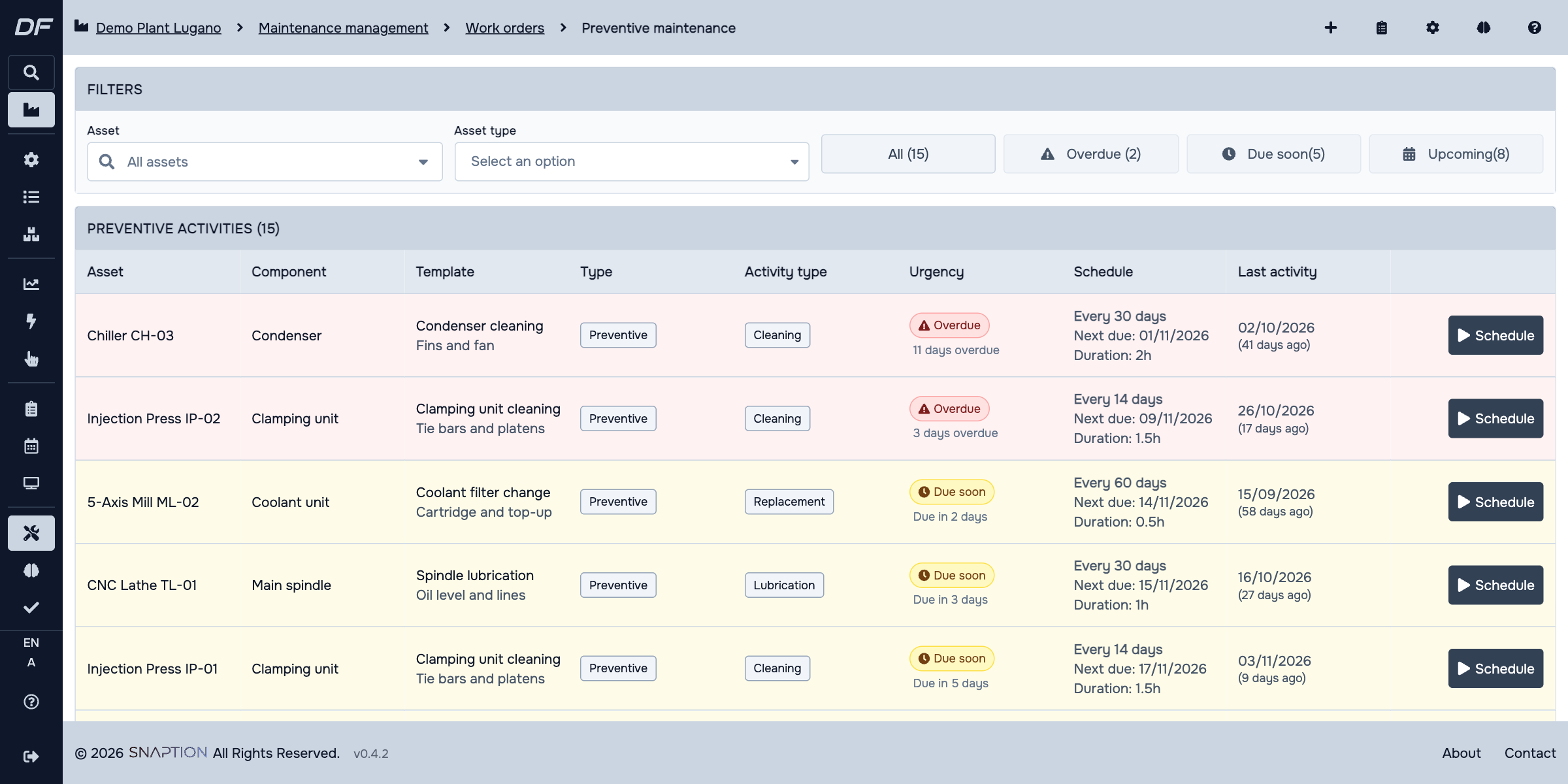
The preventive maintenance schedule in DigiFactor: overdue activities at the top. Demo data.
3. One board for the work orders
Reported faults, released orders, work in progress and closed work should sit in one view, with the assigned technician and the priority. A Kanban board shows what a list hides: how much work is open, who is overloaded, what is urgent.

The work order board in DigiFactor. Demo data.
4. An AI agent for diagnosis
The first problem remains: knowledge. When an alarm appears, the answer is almost always written somewhere: in the alarm table of the manual, in an intervention report from two years ago, in the history of the machine. Finding it takes time, and this is where an AI agent helps.
In DigiFactor this agent is called The Fixer. The technician asks in their own words, for example "AL02 on chiller CH-03, what do I do?", and gets:
- The safety instructions first, whenever a step touches the machine.
- A few numbered steps, in the order to do them.
- The source of every step: the document and the page, one click away.
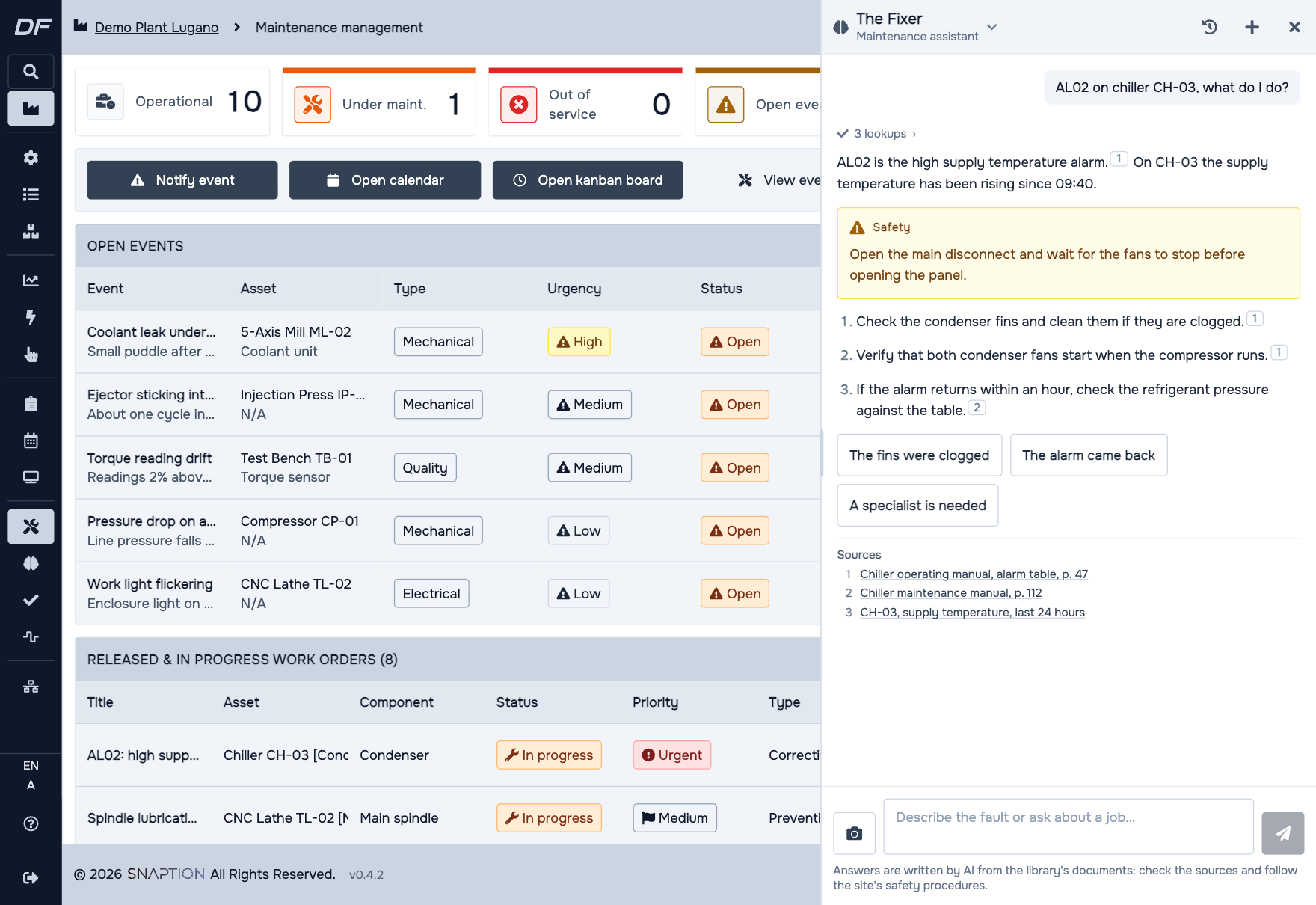
The Fixer beside the maintenance page. Illustrative example: documents and values are invented.
At the end of the job the agent drafts the summary: symptom, cause, actions and spare parts. The technician corrects and confirms it, and the case enters the history of the machine, where it will help the next person.
What an AI agent must not do
It is worth saying plainly, because it concerns safety:
- It does not command machines and changes nothing in the platform.
- It does not make up values: a torque or a temperature that is not in a document is not given.
- It never suggests bypassing guards or working on live, pressurised or moving parts.
- It sends you to the specialist or the manufacturer when the manual reserves the job for them.
People decide. The agent shortens the road between the question and the right page of the manual.
Where to start
- Fill in the asset list for one area, not the whole plant.
- Write templates for the five preventive activities that are skipped most often today.
- Put the open faults on the board.
- Upload the manuals of the most critical machines.
The details are on the maintenance management module page.
In a demo we start from one of your machines and a real alarm. Book a demo: we'll get back to you within one business day.