DigiFactor adopts ISA-95: a standard model, simpler integrations
DigiFactor adopts ISA-95: a standard model, simpler integrations
DigiFactor now describes the factory according to ISA-95, the international standard (IEC 62264) that for more than twenty years has defined how equipment, materials and processes are modeled between the shop floor and the enterprise level.
For DigiFactor users this means two things: a data model that enterprise systems already understand, and planning that respects the real constraints of your machines.
Integrates with standard systems
ERP and MES already describe equipment, materials, bills of materials and routings using ISA-95 concepts. By adopting the same model, DigiFactor speaks their language: a Work Center is a Work Center, a bill of materials is a bill of materials, a process segment is a process segment.
This changes how integrations are done:
- Direct mappings instead of translations. Concepts match one to one, so connecting DigiFactor to your ERP or MES needs less custom logic.
- Shorter, more predictable projects. An integrator who knows ISA-95 already knows where every piece of information lives, without having to learn a proprietary model.
- Less dependence on a single system. If you change ERP tomorrow, the factory model stays the same, and so do the integrations with the other modules.
Without a common model, every system describes the factory its own way, and every integration becomes a translation where errors can creep in. With ISA-95, that step disappears.
What changes for you, in short
- Simpler integration. Same model as ERP and MES: fewer custom mappings, fewer surprises.
- Plans that hold up on the shop floor. A step can only be planned on machines that can actually run it, with compatible tooling.
- One piece of data, one place. Serial number, warranty and installation dates live on the machine, and maintenance reads them from there.
- Less manual entry. Defaults per machine family, recurring operations defined once.
- Fast start. Import your structure, materials, bills of materials and routings from the CSV files you already have.
How it works
The factory as it really is
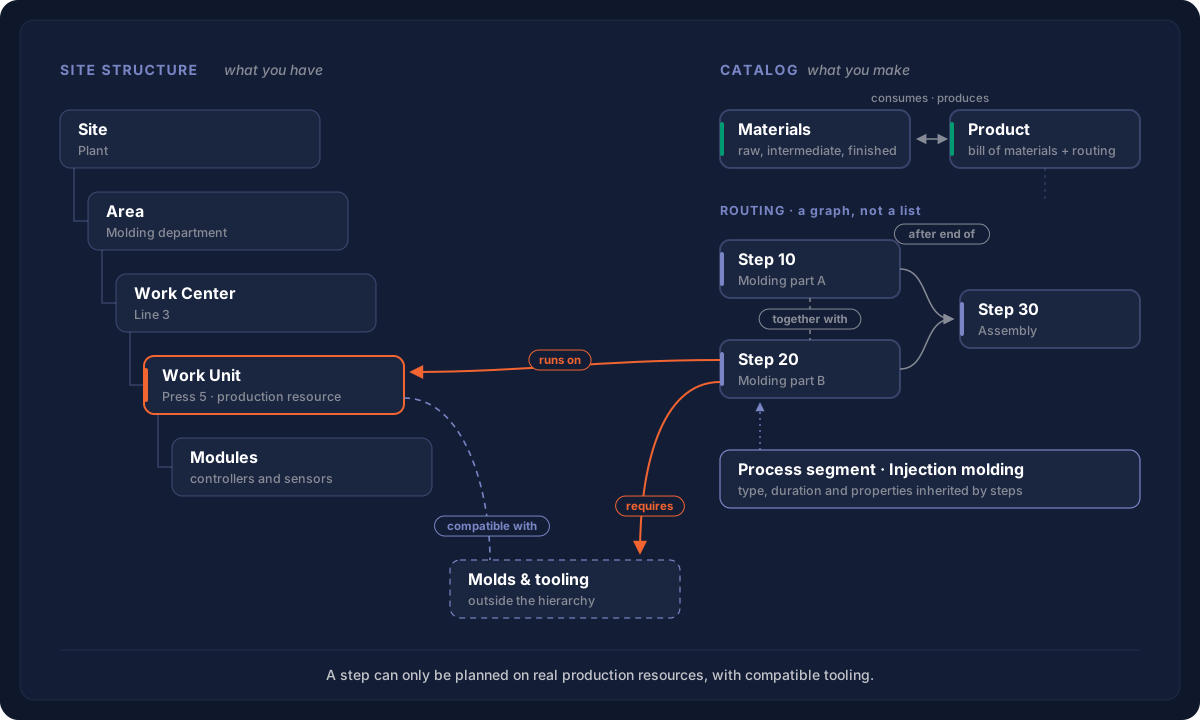
Before, everything was a "device". Now every piece of equipment has its level: Site and Area say where it is, the Work Center is the line or process cell, the Work Unit is the individual machine, and inside it sit control modules and sensors.
Molds, dies and tools, on the other hand, sit outside the hierarchy, because a mold doesn't belong to a press: it gets mounted on it. Instead of a fixed position they have an explicit relationship, compatible tooling: this mold fits these presses, and only these.
Decide once per family
Every machine can belong to a class, for example "Injection press" or "Mold". The class answers two questions once and for all: can we plan on it? and does maintenance look after it? Every machine in the family inherits the answer. Exceptions are still possible, but they show up clearly as exceptions.
The catalog says how you produce
Next to "what you have" there is "what you make": the Catalog.
- Materials: raw material, intermediate or finished good. You don't set the level yourself; DigiFactor derives it from how the material is used.
- Products: the recipe for making a material. The bill of materials says what it consumes, the routing which steps it goes through.
- Steps linked by real dependencies: "after the end of", "together with", "within 4 hours of". The routing is no longer a list but a graph: two components are molded in parallel and flow into the same assembly, and that's exactly how you see it on screen.
- Process segments: the library of recurring operations. "Injection molding" is defined once, and every step that uses it inherits its type, duration and properties.
Where the two worlds meet
This is what makes the difference. A step states which machines it can run on, and you can only choose among the site's real production resources. For each machine it states which tooling is needed, and you can only choose molds compatible with that machine.
The result: you can no longer write a routing the shop floor can't execute. The wrong mold on the wrong press isn't a mistake to discover at the machine. It's simply not an option.
The standard, without the bureaucracy
"Industrial standard" can make people fear the software will turn into a form to fill in. That's not what happened, and it was a deliberate choice.
We adopted the model of ISA-95, not its complexity. The names come from the standard, but every screen shows only what you need: sortable columns, filterable lists, optional fields that stay collapsed until you open them. And in the Guide, a single diagram shows how sites, machines, tooling, materials, products and steps connect.
Our yardstick hasn't changed: a shift supervisor should find the answer faster than on the sheet of paper DigiFactor replaced, and a plant manager should be able to trust that the answer is the same across every module.
A foundation that grows with you
A standard is an investment that pays off with every new module. Planning, quality, maintenance and analytics all read the same model: every new feature starts from solid foundations instead of inventing its own version of the factory.
Already using DigiFactor? Four steps to get started
The switch to the new names is already done, and old links automatically redirect to the new pages. To make the most of the new model:
- In Site structure, assign a level to your machines and mark the ones that are production resources.
- Link each machine to its compatible tooling.
- In the Catalog, create process segments for the operations you repeat.
- Import materials, products and bills of materials from CSV: the guided import previews what will be created or updated, flags issues row by row and, if you reload the same file, updates instead of duplicating.
Want to see your factory modeled this way?
In a demo we'll map one of your lines together: machines, molds and a real routing. Book a demo: we'll get back to you within one business day.
The factory hasn't changed. But now every part of DigiFactor describes it the same way.